Balancing Free Play Mechanics with Progressive Prize Pool Dynamics in Slot Development

Game developers face specific technical and regulatory hurdles when they merge free play options with progressive prize pools, and those choices shape how contributions flow into shared jackpots while maintaining compliance across multiple jurisdictions. Progressive systems accumulate portions of wagers from real-money bets into growing prize pools, yet free play sessions introduce variables around participation rates, contribution percentages, and return-to-player calculations that require precise calibration.
Core Components of Progressive Systems and Free Play Integration
Progressive prize pools rely on a percentage of each qualifying bet feeding into a central or local meter, and developers must decide whether free play rounds trigger those contributions or operate on separate non-contributing RNG cycles. Data from industry reports indicate that many platforms isolate free play RNG streams to prevent dilution of pool growth rates, while others allow limited contributions during promotional free spin events tied to real-money deposits. This distinction affects pool velocity, with isolated systems showing steadier accumulation patterns according to figures compiled by the Nevada Gaming Control Board.
Engineers adjust base game mathematics so that free play modes preserve the advertised RTP without drawing from progressive reserves, and this separation often involves dual RNG seeds or weighted outcome tables that mirror paid play while excluding jackpot triggers. Observers note that such architecture prevents unintended pool inflation during high-volume demo sessions, which can reach thousands of spins per user without monetary input.
Technical Architecture Choices During Development
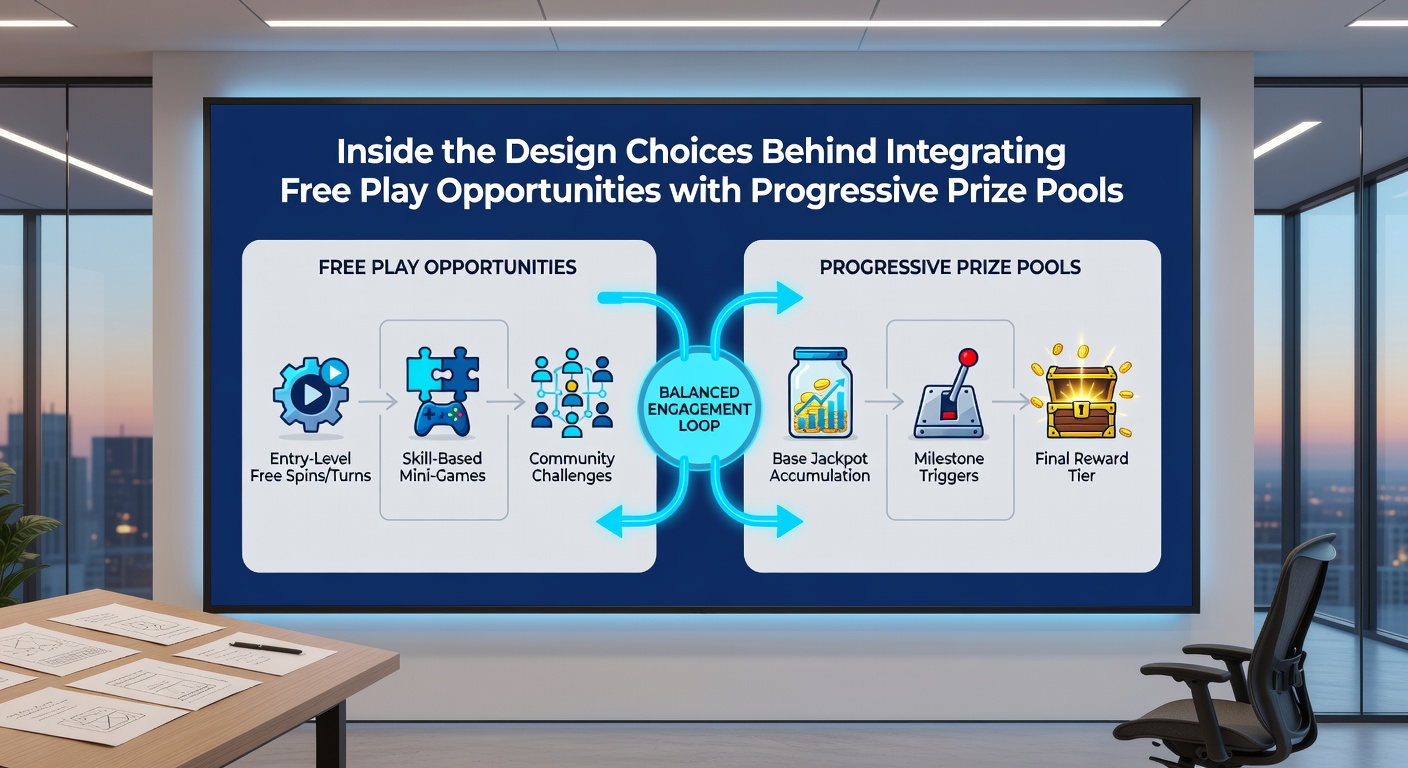
Integration teams evaluate whether free play should mirror real-money volatility or dampen it to encourage longer sessions, and those decisions hinge on server-side logic that tracks session type before routing bets to contribution ledgers. Multiple providers deploy modular jackpot controllers that accept flags for free versus paid modes, allowing operators to toggle contribution rules without rebuilding entire game clients. Research from the University of Nevada's International Gaming Institute shows that configurable modules reduce certification timelines by several weeks when regulators review updates in markets like New Jersey and Pennsylvania.
Database schemas must record free play outcomes separately from paid results to support audit trails, and this logging layer feeds into both player analytics dashboards and regulatory reporting systems. Developers frequently implement contribution multipliers that scale down during free play windows, ensuring progressive meters advance primarily through real stakes while still offering engagement hooks that keep users in the ecosystem.
Regulatory Compliance Across Regions
Regulators in various markets require clear disclosure of how free play affects jackpot eligibility, and design teams embed those rules into both client displays and backend validation checks. In May 2026 several suppliers introduced updated frameworks that automatically flag non-contributing spins during free play, aligning with evolving standards from bodies such as the New Jersey Division of Gaming Enforcement. These updates also address cross-border play where a single pool might serve users under different contribution mandates.
Compliance documentation often includes probability tables that isolate free play RTP segments, and testing labs verify that progressive triggers remain inaccessible during those modes unless explicitly marketed as bonus features funded by operator reserves. Such measures maintain pool integrity while permitting operators to run acquisition campaigns that introduce new users through extended demo access.
Player Retention and Engagement Modeling
Analytics platforms track how free play exposure correlates with later real-money deposits and jackpot participation rates, and developers incorporate these insights when setting contribution thresholds and prize pool visibility. Studies from academic sources reveal that users who transition from free play to paid sessions contribute to pool growth at rates comparable to direct entrants, provided the free experience accurately reflects paid volatility. This parity reduces friction during conversion and supports sustainable meter increases over time.
Designers also embed teaser animations that display live progressive values even during free play, creating anticipation without granting eligibility until a qualifying real-money spin occurs. These visual cues rely on real-time API calls to centralized meters, and operators report measurable lifts in session duration when such elements remain active across both play types.
Future Considerations for 2026 and Beyond
Emerging standards around responsible gaming tools may further influence how free play interacts with progressive systems, particularly around session limits and loss thresholds that apply uniformly regardless of stake type. Developers continue refining algorithms that dynamically adjust contribution percentages based on aggregate play volume, ensuring pools remain attractive without risking overexposure during promotional periods. Industry associations have documented cases where these adjustments stabilized growth curves across multi-operator networks.
Conclusion
The design choices surrounding free play and progressive prize pools center on maintaining mathematical integrity, regulatory alignment, and engagement balance through modular systems and precise contribution rules. As platforms expand in 2026, these integrations will continue evolving around data-driven thresholds that support both player acquisition and jackpot sustainability across licensed markets.